Understanding the Rise of E-Commerce in Sri Lanka
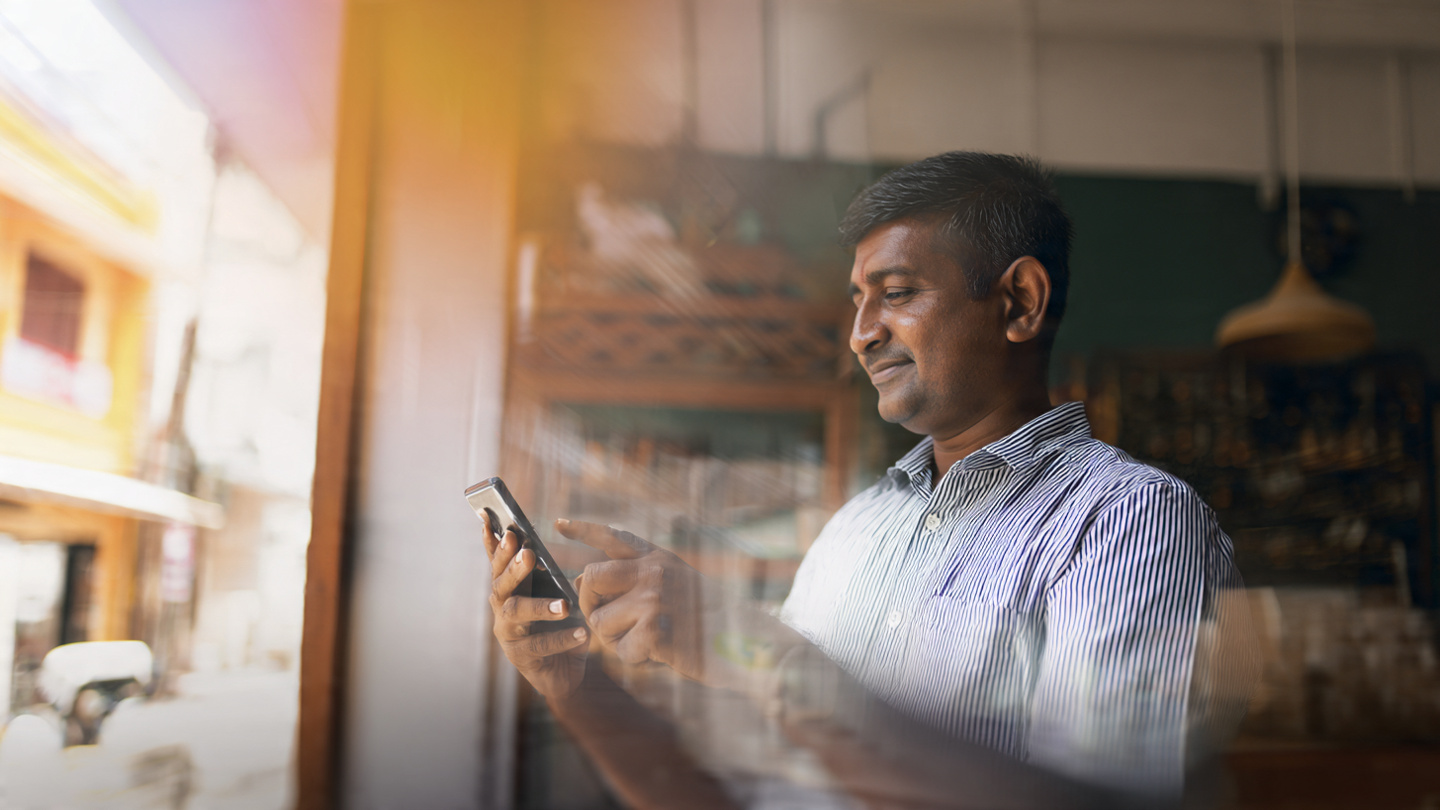
E-commerce has rapidly gained momentum across Sri Lanka over the last decade. With increased internet penetration and affordable smartphones, more consumers are shopping online than ever before. This shift has opened new doors for entrepreneurs, especially small business owners looking to scale without heavy investments.
Growth of Internet and Smartphone Usage
Sri Lanka now boasts millions of active internet users, with mobile internet leading the way. Affordable data packages and widespread smartphone access allow customers to browse, compare, and purchase products from anywhere in the country.
Changing Consumer Buying Behavior
Modern Sri Lankan consumers value convenience, variety, and competitive pricing. Online shopping meets these expectations perfectly, making e-commerce a powerful growth engine for small businesses.
Why Small Businesses in Sri Lanka Must Embrace E-Commerce
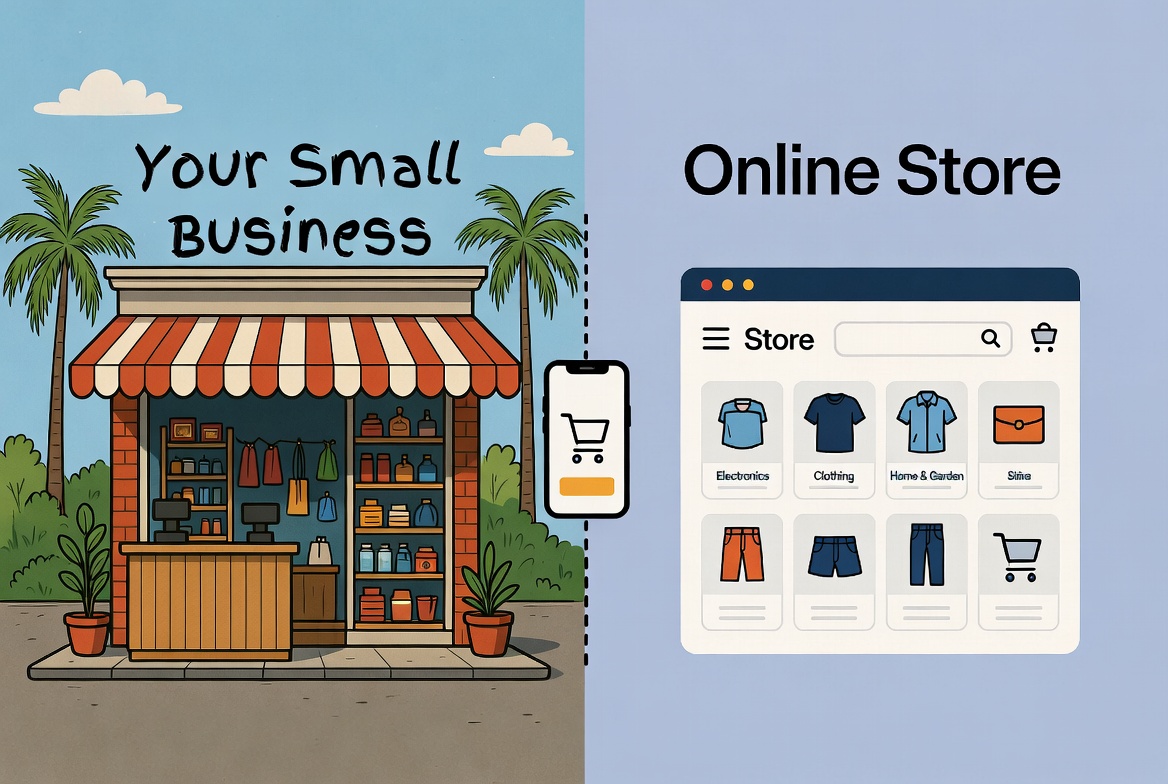
Traditional brick-and-mortar businesses often face challenges such as high rent, limited reach, and rising operational costs. This is where How E-Commerce Can Transform Your Small Business in Sri Lanka becomes especially relevant.
Overcoming Traditional Business Limitations
E-commerce removes geographical barriers. A small shop in Matara can sell products to customers in Jaffna or even overseas without opening new physical locations.
Competing with Large Retailers
Online platforms level the playing field. With the right pricing, branding, and marketing strategy, even micro-businesses can compete with established brands.
Key Benefits of E-Commerce for Sri Lankan Small Businesses
Expanded Market Reach
E-commerce allows businesses to reach customers nationwide and internationally. Exporting handmade goods, spices, or clothing becomes far more accessible through online platforms.
Lower Operational Costs
Running an online store significantly reduces costs related to rent, utilities, and staffing. These savings can be reinvested into marketing or product development.
24/7 Business Availability
Unlike physical stores, e-commerce websites operate around the clock, enabling sales even while you sleep.
Types of E-Commerce Models Suitable for Sri Lanka
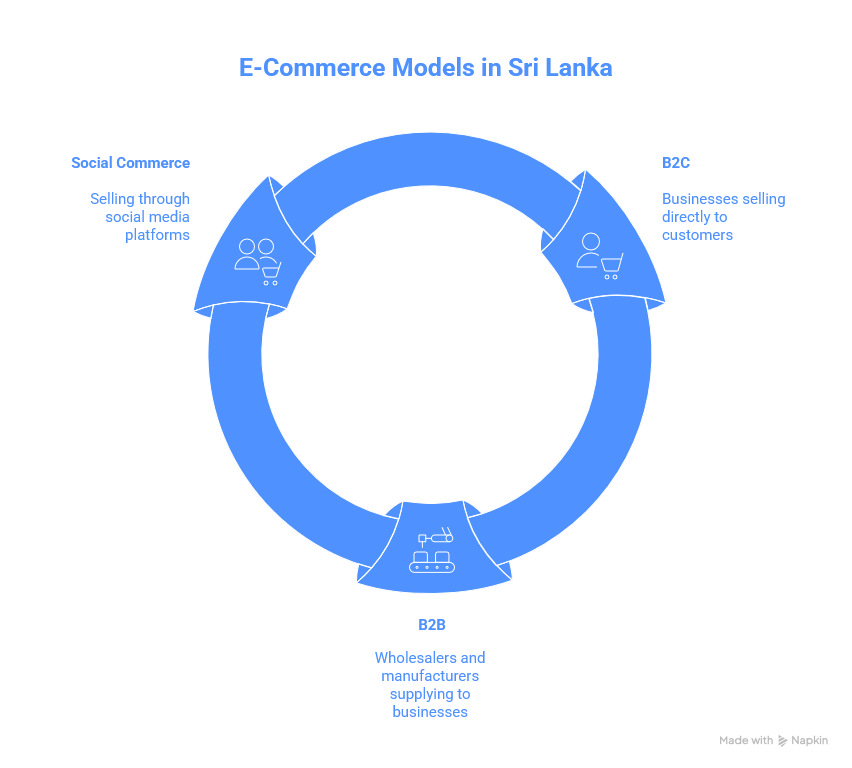
B2C (Business to Consumer)
This is the most common model, where businesses sell directly to customers through websites or marketplaces.
B2B (Business to Business)
Ideal for wholesalers and manufacturers supplying goods to retailers or other companies.
Social Commerce
Selling via Facebook, Instagram, and WhatsApp is extremely popular in Sri Lanka due to high social media usage.
Setting Up an E-Commerce Business in Sri Lanka
Choosing the Right Platform
Popular options include Shopify, WooCommerce, and local marketplaces like Daraz. The right platform depends on your budget and business goals.
Payment Gateways and Local Banking Support
Sri Lanka offers several payment gateway options such as PayHere and local bank integrations, enabling secure online transactions.
Delivery and Logistics Solutions
Reliable courier services like Domex and Pronto help ensure timely deliveries across the island.
Digital Marketing Strategies to Grow Your Online Store
SEO and Content Marketing
Search engine optimization helps your business rank higher on Google. Writing helpful blog content and optimizing product descriptions improves visibility. Learn more about SEO basics from trusted resources like Moz.
Social Media and Influencer Marketing
Collaborating with local influencers and running targeted ads can quickly boost brand awareness and sales.
Common Challenges and How to Overcome Them
Trust and Online Security
Displaying customer reviews, offering cash-on-delivery, and using secure payment gateways build customer trust.
Digital Literacy Barriers
Simple tutorials, user-friendly websites, and customer support help bridge the digital knowledge gap.
Government Support and Opportunities
ICTA and SME Development Programs
Sri Lankan government initiatives support digital transformation through grants, training, and infrastructure development, making it easier for small businesses to adopt e-commerce.
Real-Life Examples of E-Commerce Success in Sri Lanka
Many local brands selling handicrafts, organic food, and fashion have grown rapidly by going online. Their success proves that How E-Commerce Can Transform Your Small Business in Sri Lanka is not just a theory—it’s a proven reality.
Frequently Asked Questions (FAQs)
1. Is e-commerce profitable for small businesses in Sri Lanka?
Yes, with proper planning and marketing, e-commerce can be highly profitable.
2. Do I need a large budget to start e-commerce?
No, many platforms allow you to start with minimal investment.
3. What products sell best online in Sri Lanka?
Clothing, electronics, beauty products, and food items perform well.
4. Is online payment safe in Sri Lanka?
Yes, reputable payment gateways offer strong security measures.
5. Can I sell internationally from Sri Lanka?
Absolutely. Many small businesses export products through e-commerce.
6. How long does it take to see results?
Results vary, but consistent effort can show growth within a few months.
Conclusion
In today’s digital age, understanding How E-Commerce Can Transform Your Small Business in Sri Lanka is essential for long-term success. By embracing online selling, leveraging digital marketing, and adapting to changing consumer habits, small businesses can achieve sustainable growth and compete on a global scale. The future of Sri Lankan entrepreneurship is digital—and now is the perfect time to get started.